Securing a professional pest control service Baltimore property owners can rely on requires targeted structural diagnostics rather than basic perimeter spraying. In high-density settings like brick rowhouses near Patterson Park and older detached properties in Roland Park, pest management demands architectural exclusion alongside targeted chemical eradication.

A professional pest control service company in Baltimore is a specialized environmental management provider that inspects, eliminates, and structurally excludes urban biological vectors such as Norway rats, bed bugs, subterranean termites, and German cockroaches from residential dwellings and commercial properties.
Every service reflects the same meticulous attention to detail, whether it's a single job or a larger pest control service project across Baltimore.
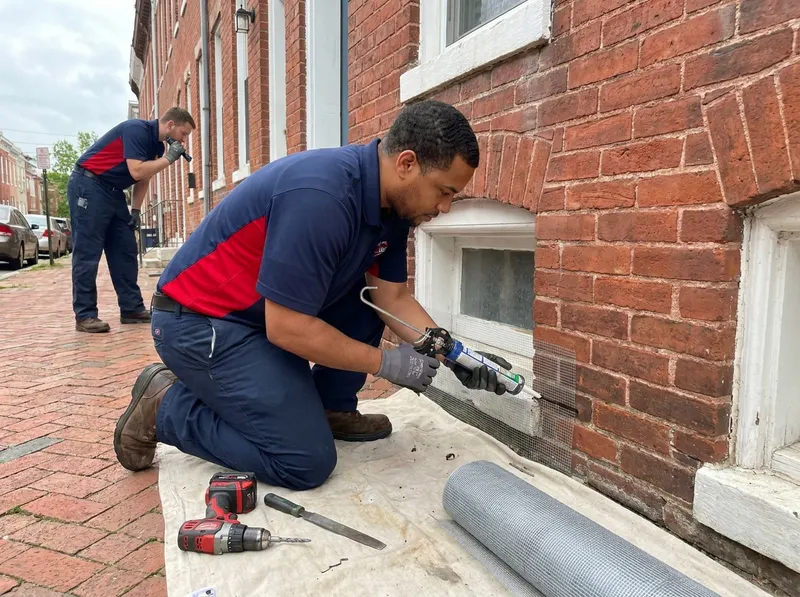
Physical barrier sealing utilizing 1/4-inch 19-gauge hot-dipped galvanized hardware cloth, woven copper wire mesh, and elastomeric structural sealants across fieldstone foundations, shared dirt crawlspaces, and basement utility penetrations where Norway rats enter. Technicians inspect shared brick party walls, exterior masonry step returns, and basement sewer pipe exits, closing structural gaps larger than 1/4-inch to halt rodent runs without introducing toxic airborne compounds into finished living quarters.
Get a quote →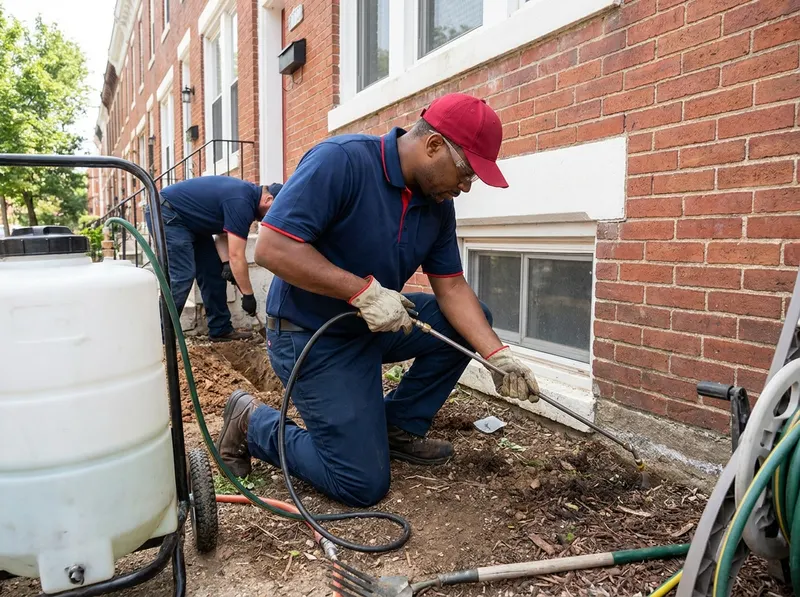
Perimeter trenching and sub-slab injection utilizing non-repellent liquid termiticides, such as fipronil formulations, applied at targeted rates of 4 gallons per 10 linear feet per foot of depth to eliminate subterranean termite colonies attacking structural sill plates. Technicians drill through exterior concrete patios, porch slabs, and foundation footings to establish a continuous protective barrier around historical rubblestone and masonry foundations common across older Baltimore architecture.
Get a quote →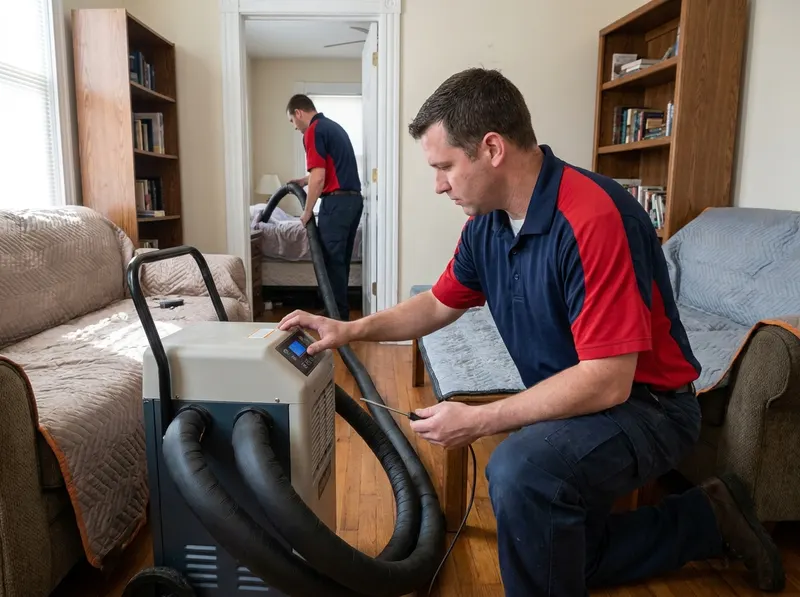
Whole-structure convective heat treatments utilizing high-output commercial heating units and air-moving blowers that elevate enclosed indoor temperatures to a lethal thermal envelope between 122°F and 135°F for a minimum of 4 sustained hours. This non-chemical process eliminates adult bed bugs, nymphs, and dormant egg clusters tucked within wall voids, baseboards, upholstery seams, and subflooring in a single visit without chemical residues.
Get a quote →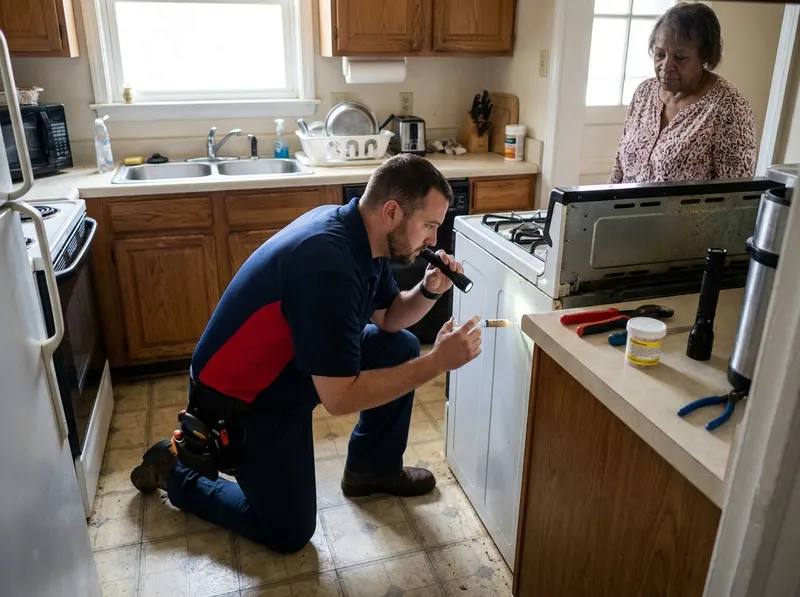
Micro-deposit placement of non-volatile abamectin, indoxacarb, and hydramethylnon gel matrices paired with insect growth regulators (IGRs) positioned specifically inside cabinet hinge pockets, electrical junction boxes, structural wall chases, and behind refrigeration motor housings. This targeted protocol disrupts the chitin synthesis of nymphal stages, prevents reproduction in multi-unit plumbing chases, and eliminates localized infestations without broad-spectrum aerosol drift.
Get a quote →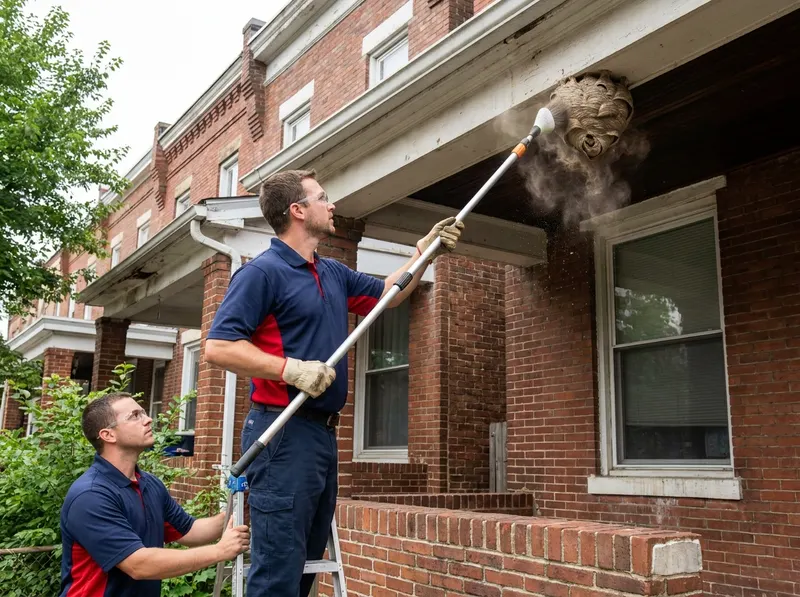
Direct void injection and mechanical extraction of aerial bald-faced hornet nests, European hornet cavities, paper wasp combs, and subterranean yellow jacket colonies anchored beneath decorative wood soffits, brick cornices, and retaining walls. Technicians apply specialized fast-acting knockdown aerosols or dry dust formulations into structural entry voids before manually extracting the physical nesting structures to prevent future secondary infestations by carpet beetles or scavenging pests.
Get a quote →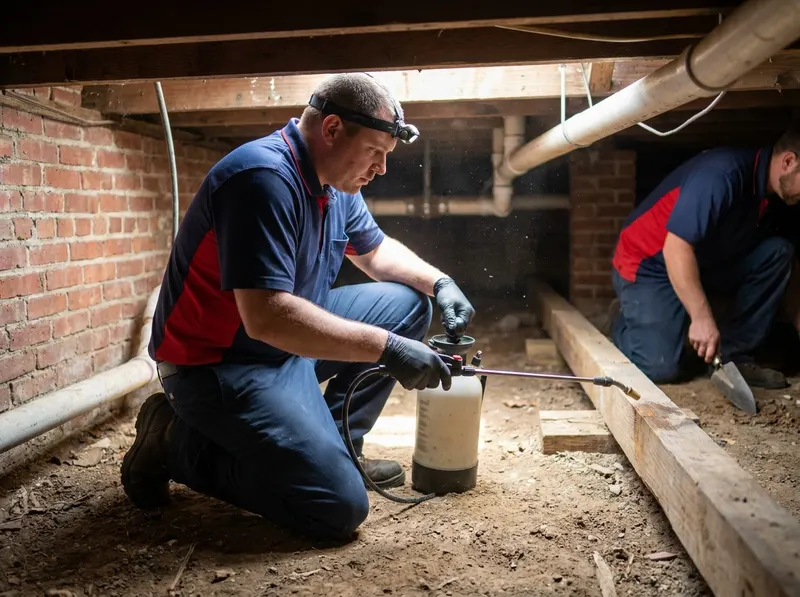
Borate-based timber preservation spray applications applied directly to exposed structural floor joists and subfloors, paired with 10-mil to 12-mil reinforced polyethylene vapor barrier installations across dirt floor crawlspaces. This dual physical-chemical barrier halts active powderpost beetle larvae, wood-decaying fungal spores, and high-humidity microclimates that attract centipedes, camel crickets, and dampwood-seeking biological pests into lower living floors.
Get a quote →
Targeted micro-encapsulated foliage misting applications directed toward exterior resting zones, including the undersides of dense shade vegetation, ivy beds, low-hanging tree canopies, and non-draining yard perimeters during peak reproductive summer cycles from May through September. Technicians combine synthetic pyrethroid barriers with biological larvicides in standing water sources to break reproductive cycles without contaminating ornamental flower beds.
Get a quote →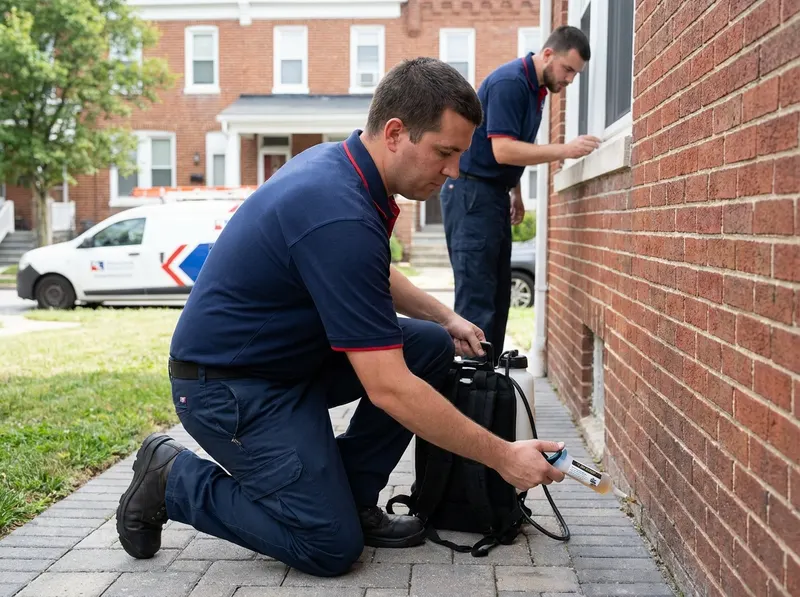
Multi-tier sugar and protein bait matrices deployed alongside non-repellent liquid exterior barriers to eliminate satellite nests of carpenter ants, odorous house ants, and pavement ants nesting in structural framework or brick paving. Formulations allow worker ants to carry active ingredients back to the primary queen within subterranean or wall-void nests, eradicating the reproductive core of the colony rather than merely diverting foraging workers.
Get a quote →You get a firm, itemized quote for your pest control service before any work begins, no surprises, no pressure.
Careful prep, tidy work, and a full cleanup when we are done. We treat your home and belongings like our own.
The same trusted, background-checked team from the first call to the final check.
Selecting the proper eradication protocol depends on the pest biology, structural building materials, and the degree of architectural infestation. If managing subterranean termites in an older timber-frame dwelling near Druid Hill Park, choose a sub-slab liquid termiticide barrier or monitoring bait stations; if addressing subterranean termite activity in a stone foundation, liquid soil trenching provides immediate boundary control, whereas bait monitoring systems require 60 to 90 days to achieve full colony elimination. The trade-off is higher upfront installation expenditure versus ongoing monitoring fees.
For German cockroach cleanouts in multi-unit properties in Mount Vernon or Charles Village, insect growth regulator (IGR) gels combined with vacuum extraction provide targeted containment without airborne drift; aerosol thermal fogging delivers faster initial knockdown across large empty footprints, but risks driving adult populations deeper into adjoining wall cavities. For rodent control in connected rowhouses throughout Fells Point and Canton, mechanical copper mesh exclusion paired with interior tamper-resistant bait stations addresses the structural source; relying exclusively on exterior rodenticide boxes leaves shared interior wall chases open to recurring migration once the primary outdoor feeding pressure shifts. When evaluating whole-structure bed bug remediation, thermal convective heat treatment eradicates eggs and nymphs inside wall voids in a single 8-hour cycle, whereas chemical residual spot applications require two to three follow-up visits spaced 14 days apart to interrupt hatching cycles, trading lower immediate cost for extended disruption.
For seasonal perimeter defense against perimeter invaders like odorous house ants or centipedes, quarterly microencapsulated exterior barrier bands protect masonry foundations without interior pesticide applications, though properties with chronic interior moisture damage will still require targeted sub-floor void baiting to resolve satellite colonies permanently.
Every project gets a firm, written price after a free on-site visit. Ranges below for orientation.
Tell us about your pest control service job and we'll send a clear, written quote, usually the same day. Or just call and talk to a real Baltimore pro.
(443) 726-9348
Baltimore City presents unique structural vector pressures due to thousands of contiguous brick rowhomes sharing interconnected party walls, hollow ceiling plenums, and century-old stone foundations. In historic harbor areas like Fells Point and Locust Point, proximity to the Patapsco River and tidal estuaries elevates Norway rat burrowing along cobblestone alleys, aging brick sewers, and stone bulkhead interfaces. In neighborhoods such as Hampden and Mount Vernon, aging mortared fieldstone foundations permit subterranean rodents and moisture pests to penetrate baseline structural timbers. Farther north, the dense, mature tree canopies surrounding Druid Hill Park, Roland Park, and the Johns Hopkins University Homewood Campus drive carpenter ants and subterranean termites into damp structural lumber through stone rubblestone transitions and unsealed ground-level framing. Properties fronting the green space of Patterson Park experience intense seasonal rodent pressure each autumn, as temperatures drop along Eastern Avenue and Linwood Avenue, driving outdoor foraging rats toward warm residential basements. These connected architectural envelopes mean that an unsealed utility chase or deteriorated brick parapet in one home directly compromises the bio-security of the entire block, making localized chemical sprays inadequate without aggressive mechanical exclusion and perimeter barrier defense.
Free estimates for Baltimore & the surrounding area.
 Elvaris Pest Solutions