Pavement ants exploit the unique structural architecture of Baltimore City. In historic brick rowhomes throughout Canton, Fells Point, and Mount Vernon, original lime-based mortar naturally softens over decades,…
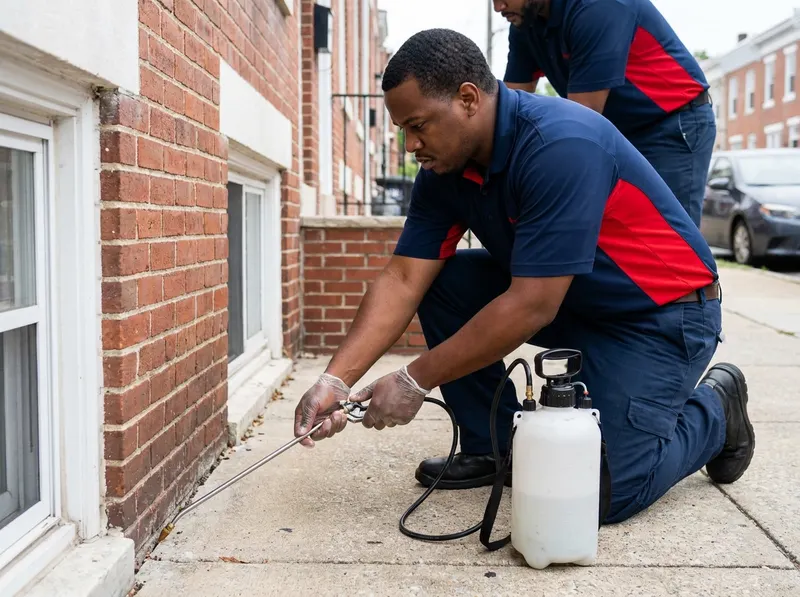
Pavement ants exploit the unique structural architecture of Baltimore City. In historic brick rowhomes throughout Canton, Fells Point, and Mount Vernon, original lime-based mortar naturally softens over decades, developing micro-voids between the interior plaster and exterior masonry wythes. Pavement ant queens establish subterranean nests beneath granite curbs, marble front steps, and stone foundation footings. From these anchor points, workers follow plumbing chases and sub-slab voids directly into finished living spaces, kitchen pantries, and lower-level baseboards. Standard surface spraying merely repels individual foragers, forcing the colony to fracture into satellite nests across shared party walls. Masonry void inoculation stops this dynamic by mechanically introducing transfer-active insect growth regulators and non-repellent liquid actives directly into the subsurface cavities where queens reside.
Pavement ant & masonry void inoculation fits properties displaying persistent exterior soil mounds along stone joints, structural slab seams, or interior baseboard sand piles. If ant trails emerge exclusively from unsealed window casings or tree branches touching rooflines, localized botanical dusts or exterior perimeter barrier sprays represent the suitable path. The technical trade-off involves invasive access: void inoculation requires drilling 1/4-inch access ports along exterior mortar lines or basement expansion joints to inject pressurized active foam, whereas topical sprays avoid mechanical alterations but cannot reach concealed colonies beneath three-wythe brick walls. For multi-story properties along East Baltimore Street near Patterson Park or rowhomes bordering Fort McHenry National Monument in Locust Point, structural injection addresses the primary nesting reservoir inside the masonry itself.
Treatment execution follows four distinct phases. Step one comprises a thermal and acoustic inspection of basement slabs and perimeter brick coursing to locate primary galleries. Step two entails precision drilling of discreet 1/4-inch ports into mortar joints beneath stoops, patio pavers, and foundation sills. Step three applies pressurized non-repellent active foam through calibrated injection tips, filling structural voids without staining historic brick or discharging aerosol residues into domestic living spaces. Step four seals all injection ports with color-matched structural mortar compound. The non-repellent active allows foraging ants to pass through treated zones undisturbed, carrying the compound back to subterranean chambers where cross-grooming transfers it directly to the reproductive queen within 7 to 14 days.
Every job gets a firm, written price after a free on-site visit.
Tell us about your pavement ant & masonry void inoculation job in Baltimore and we'll send a clear, written quote, usually the same day.
 Elvaris Pest Solutions